

Lately, I’ve found myself constantly overthinking at night. I’ll be on the couch, slowly drifting toward sleep, eyelids heavy, brain relaxed. But as soon as I move to bed — boom. Suddenly, my mind is wide awake.
Instead of resting, I’m caught in a loop of racing thoughts: creating scenarios that will never happen, replaying awkward conversations, or stressing about the future. If you’ve ever wondered how to stop overthinking at night and actually fall asleep, you’re not alone.
Why Do We Overthink at Night?
During the day, we’re distracted by work, family, errands, and endless notifications. Our brains don’t have much room to wander. But once the lights are off, the stillness of the night magnifies every unresolved thought.
This is when the default mode network in the brain kicks in — the part that’s active when we’re not focused on a task. Instead of switching off, it replays worries like:
- Why did I say that at work?
- What if tomorrow goes badly?
- Am I falling behind in life compared to others?
No wonder we struggle to sleep with anxiety. At night, these thoughts feel more intense, often creating bedtime anxiety that fuels overthinking.
When Overthinking Affects Sleep
The biggest problem with overthinking at night is how much it disrupts sleep. Tossing, turning, and clock-watching quickly turn into frustration. And the more frustrated you get, the less chance you have of drifting off.
Getting quality sleep isn’t just about feeling rested — it’s essential for your nervous system, emotional balance, and energy. Missing sleep can:
- Increase anxiety and stress
- Lower concentration and focus
- Reduce patience and emotional resilience
- Leave you feeling drained and irritable
That’s why finding ways to stop overthinking before bed is so important. It’s not just about rest; it’s about your overall well-being.

What I’m Doing to Cope With Nighttime Overthinking
I’ve realised I can’t just say, “Stop thinking.” That doesn’t work. What does help is gently redirecting my brain:
- Sound as a distraction: I play white noise, rainfall, or ocean waves. These give my mind something calming to focus on.
- Reading before bed: Books like The Handmaid’s Tale shift my thoughts into another world, away from anxiety.
- Labeling thoughts: When anxious thoughts creep in, I tell myself: “This is just an anxious thought.” Repeating it reminds me it doesn’t deserve my full attention at midnight.
Sometimes these work instantly, other times I need to try more than one. But every small step helps my brain relax enough to fall asleep.
7 Tips to Stop Overthinking at Night
If you’re tired of lying awake with a racing mind, here are some practical tips to calm overthinking and sleep better:
1. Journal before bed
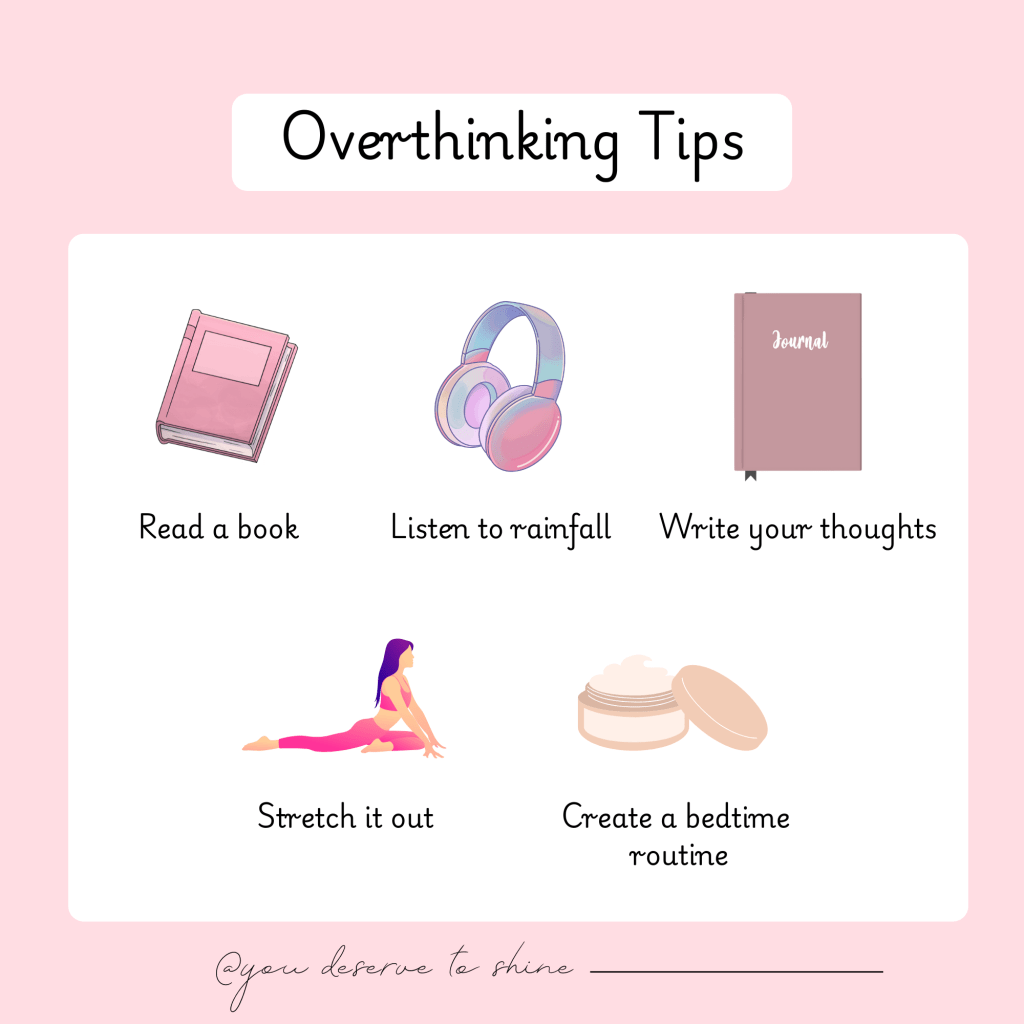
Writing down your thoughts clears space in your head. Journaling for anxiety is a powerful way to stop your brain from recycling worries.
Not sure what to write about? I put together a free downloadable sheet with 6 gentle prompts to guide your journaling at night. Grab it below.
2. Limit caffeine in the afternoon
Even a late coffee can keep your body wired. Switch to caffeine-free tea or water after lunch to help your body naturally relax by bedtime.
3. Create a bedtime routine
Consistency is key. Brushing your teeth, skincare, stretching, or reading sends signals to your brain that it’s time to wind down.
4. Try nighttime yoga or stretching
Gentle movements relax tense muscles and slow your breathing, which prepares your body for rest. Search for bedtime yoga for beginners on YouTube to follow along.
5. Keep devices away
Scrolling through your phone tricks your brain into staying alert, and social media often sparks comparison or stress. Put your phone across the room to reduce temptation.
6. Use grounding techniques
If your thoughts spiral, try the 5-4-3-2-1 method: notice five things you see, four you feel, three you hear, two you smell, and one you taste. This anchors you in the present.
7. Listen to calming sounds
Apps with sleep stories, white noise, or nature sounds can distract your mind from anxious thoughts and guide you into rest.
Final Thoughts
Overthinking at night is common, but it doesn’t have to steal your sleep. Whether it’s journaling, stretching, listening to white noise, or reminding yourself “this is just an anxious thought,” there are small, gentle practices that can quiet your mind.
Some nights will still be tough, and that’s okay. But over time, you’ll build routines that help you relax, reduce bedtime anxiety, and finally enjoy a good night’s sleep.
If you’re lying awake tonight wondering how to stop overthinking at night, just remember — you’re not alone. With a few mindful habits, you can take back control and wake up feeling refreshed.
Keep shining,
Madeline

 youdeservetoshine.blog